
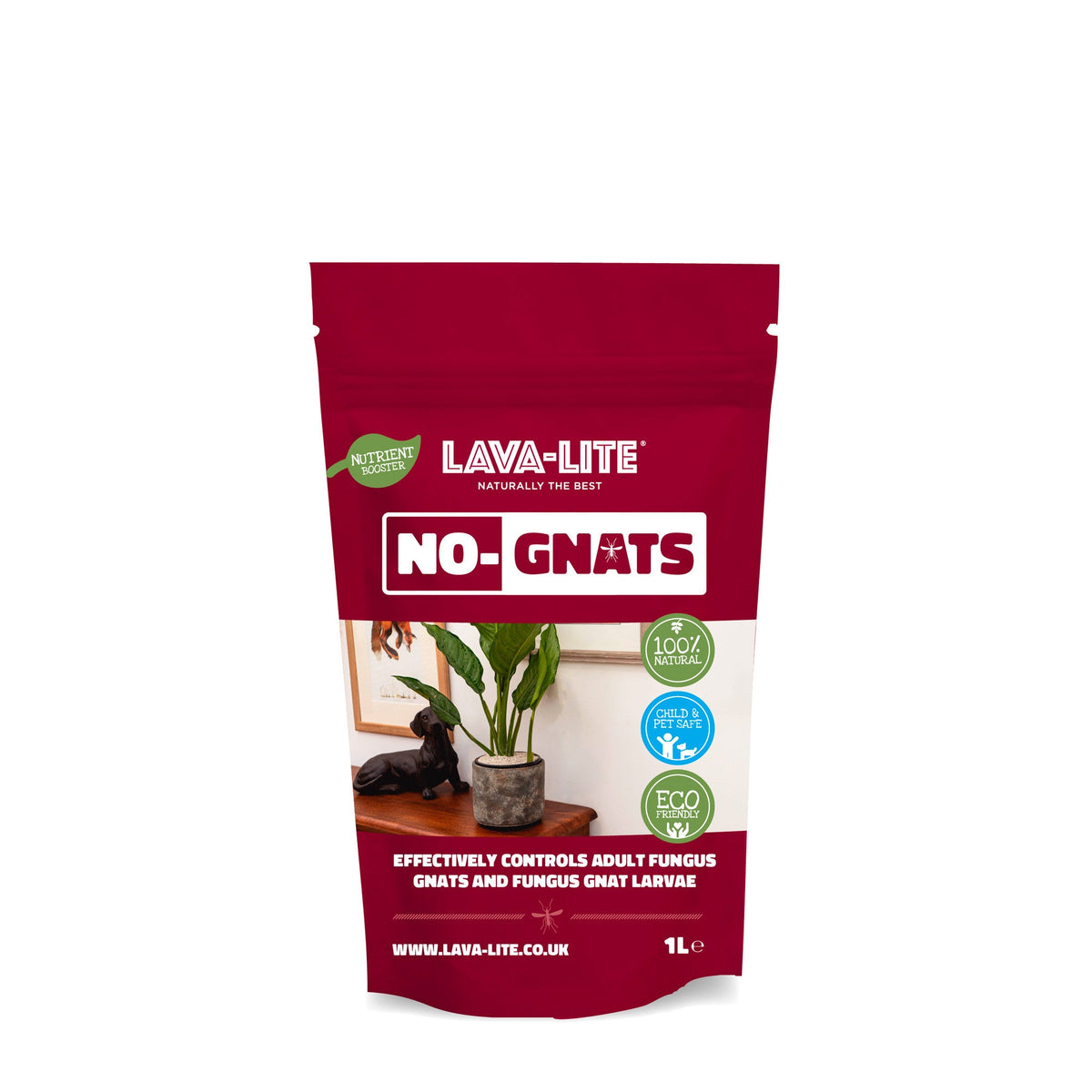
Quick answer: Fungus gnats breed in damp growing medium, so the fastest way to get rid of them is to let the surface dry out between waterings, treat the medium with a gnat treatment such as Lava-Lite No Gnats or BioGreen Garlic, and catch the adults on sticky traps while the treatment works. The earlier you catch them, the easier they are to clear.
What are fungus gnats?
Fungus gnats are small, dark flies that hover just above the surface of pots, trays and growing media. The flies you see are only part of the problem: their larvae live in the top layer of damp soil or coco, where they feed on organic matter and fine root hairs. A grow room with consistently wet media, especially one using organic soil or compost, gives them everything they need to breed.
How to get rid of fungus gnats
1. Let the surface dry out
Fungus gnats need damp conditions to lay eggs and for larvae to survive. Lava-Lite says gnats breed in constantly damp surfaces, so letting the top of your growing media dry out between waterings is one of the simplest ways to break the cycle. Water a little less often rather than a little less each time, so the surface genuinely dries before the next watering.
2. Treat the growing medium
Once the surface drying habit is in place, a dedicated treatment deals with the gnats already there. Lava-Lite No Gnats is made to target fungus gnats directly in pots and beds, in 1L, 3L or 20L sizes, applied by following the dosing on the label. For an organic option, BioGreen Garlic uses garlic extract to deter fungus gnats along with mites, thrips, aphids and whitefly, and its maker says it is safe for soil, coco and hydro setups and suitable throughout the plant's life from seedling to harvest. Avoid mixing it with strong oxidising agents such as hydrogen peroxide.
3. Catch the adults
Grow Tools Super Sticky Bug Traps are extra sticky yellow sheets that catch fungus gnats, whitefly and thrips as they fly. Hang them from tent poles or branches, or lay them flat on top of pots, and use the whole sheet or cut it into smaller strips. Traps will not clear an infestation on their own, but they cut adult numbers fast and give you an early warning if the problem is building up again.
4. Keep at it
Fungus gnats go through their life cycle quickly, so a single treatment rarely finishes the job. Keep the surface dry, reapply your chosen treatment as the label directs, and leave sticky traps in place so you can see when numbers have genuinely dropped rather than just guessing.
Which treatment should I choose?
Lava-Lite No Gnats is a direct treatment aimed squarely at fungus gnats, sold in 1L, 3L and 20L sizes, so it suits growers who want something made for this one job and who may need a larger bottle for a bigger space. BioGreen Garlic takes a broader, organic approach: it is designed to deter fungus gnats alongside other common pests such as mites, thrips, aphids and whitefly, and its maker says it works through the plant itself in both soil and hydro setups. If you only have fungus gnats to deal with, Lava-Lite No Gnats is the more direct choice. If you want one organic product that also helps against other common pests, BioGreen Garlic covers more ground. Either way, Grow Tools Super Sticky Bug Traps are worth adding so you can see whether the treatment is working.
Will fungus gnats harm my plants?
Adult fungus gnats are mostly a nuisance, but large numbers of larvae feeding on fine root hairs can slow young or recently potted plants, especially seedlings and cuttings with a small root system. Keeping the surface dry and dealing with gnats early protects the roots your plant depends on most in its first few weeks.
Stopping fungus gnats coming back
Once you have cleared an outbreak, the habits that got rid of it are also what keeps it away: water on a proper schedule rather than little and often, avoid letting pots sit in trays of standing water, and keep a few sticky traps out as an early warning system. If you move to a growing medium that holds less surface moisture, gnats have less reason to settle in the first place.
Fungus gnat FAQs
What causes fungus gnats in houseplants and grow tents?
Consistently damp growing medium is the main cause. Overwatering, pots that do not drain well, or organic soil and compost that stays wet near the surface all give fungus gnats somewhere to breed.
Do sticky traps get rid of fungus gnats on their own?
Not fully. Sticky traps such as Grow Tools Super Sticky Bug Traps catch the flying adults and show you how bad the problem is, but the larvae in the growing medium need a direct treatment like Lava-Lite No Gnats or BioGreen Garlic alongside drier watering.
Can I use a gnat treatment on seedlings and cuttings?
BioGreen Garlic's maker says it is suitable for use throughout the plant's life, from early growth through to harvest. Always check the label of the product you choose and follow the dosing given.
Are fungus gnats the same as other pests I might see on leaves?
No. Fungus gnats live in the growing medium and only fly up when disturbed. Pests such as spider mites and aphids live and feed on the leaves themselves. See our pest and disease control range for treatments aimed at leaf pests.
See the full pest and disease control range, our propagation kits for starting seedlings and cuttings the right way, and soil and growing media if you want to change what you are growing in. Available for Click & Collect from our West Bromwich store or UK delivery. Need advice? Call us on 0121 553 7872, WhatsApp our experts or pop in.